Showing posts with label #Nigerianfood. Show all posts

Sunday, 17 April 2016

Two Nigerian soups in one: Ofe Oha (Oha soup) & Ofe Nsala (White soup)

Hi Guys!!!

Hope you had a great week?....I sure did.

Surprisingly, this week I was really hungry for my local dishes. From the Nigerian Puff-puff to some other recipes I'll be uploading soon, I just really needed that traditional igbo home touch. 

Now, my favourite south eastern Nigerian soup for a pretty long time was 'oha' also pronounced 'ora' soup. But it wasn't until last year I tried 'nsala' soup in a local bukka, and I was hooked. I definitely had to learn to make it, but funny enough, it had very similar ingredients as my oha soup. 


Now, although I'm igbo, I have no idea what the word 'nsala' means, so please don't ask me...lol. But because its one soup that doesn't include palm oil in its preparation, I guess thats why its also called 'white soup'. However, the word 'oha' is actually the south eastern (igbo) name for the leaves used in making the soup. 
I would probably say the biggest challenge about making this soup here is actually the cost, especially here. Funny enough, the cost of the meat and fish used in this recipe, was actually the cheapest part of it. Thats probably b'cos I used the three most inexpensive proteins in the UK; mackerel (fish) (£1.79), gizzard (£1) and pork (£1.49). Now the two leaves, oha (£2) and oziza (£2) used, were actually the most expensive ingredients I bought. But the good thing is that, in Nigeria, its actually the reverse, the leaves are cheaper.

Fortunately, a while ago my mum had sent me about 500g of periwinkle and some 'ogiri' also known as 'ground locust beans' from Nigeria, so I didn't have to buy any here. Also, my boyfriends mum sent me about four huge stock fish pieces, and so I didn't have to buy any either.

I made both soups simultaneously (cos the ingredients are similar), and so I'm going to describe the entire process. If you want to make them separately though, you still can.

So here's how I made it....them rather #wink

Ingredients

  • 1 large Onion
  • 2 scotch bonnet peppers
  • Assorted meat (gizzard, pork, stock fish, mackerel)
  • A bunch of oha leaves
  • A bunch of oziza leaves
  • 3 tbsp salt
  • 1 tbsp of ogiri (ground locust beans)
  • 2 tbsps of crayfish
  • 4 stock cubes (2 maggi crayfish, 2 maggi chicken)
  • 1 cocoyam
  • 1 tuber of yam
  • 1 tbsp of palm oil
  • 3 cups of water
Instructions

  1. Blend the onions and pepper together, and set aside.
    Blended onions and pepper
  2. Chop the oziza leaves thinly, and the oha leaves too.
    Chopped oha leaves

    Thinly sliced oziza leaves
  3. In a pot, place the fish in a cup of water or more depending on how much fish you are using, and add a table spoon of the blended onions and pepper, a teaspoon of salt and 1 maggi crayfish cube, mix and allow to boil till its tender.
    Boiling the fish
  4. Remove the fish pieces from the broth, chop them into smaller pieces and set aside, alternatively, you could leave them whole. Add the stock fish into the broth and allow to cook till its tender add more water if you need to. 
    Chopped fish pieces
  5. In another pot, add the gizzard, pork, maggi chicken, the onion blend, a pinch of salt and a cup of water, and bring to the boil, add more water and top-up if you need to.
  6. Once the meat is done, separate them into the two pots (add some meat into the pot that had the fish broth) and put back onto the stove to boil.
  7. Cut up the yam and cocoyam, and boil in some water for about 20 minutes or until its fork tender. Remove from the water and set aside.
    Boiled yam and cocoyam
  8. Separate the yam from the cocoyam and blend both separately in a food processor. Starting with the yam.
    The yam about to be pureed in the food processor
    Pureed yam

    Checking the consistency and about to transfer
  9. Once the yam is pureed well, transfer it into the pot of meat for the nsala and allow to boil for about 10 minutes, until the yam clumps disappear. 
    Adding the pureed yam into the pot for the nsala soup

  10. Puree the cocoyam with some palm oil, and transfer into the pot for the oha soup, it acts as the thickener.
    Pureed cocoyam with some palm oil

    Add caption

    The cocoyam clumps added into the oha soup pot
  11. Add the crayfish and chopped fish pieces into both pots.
    Adding the fish pieces into the oha soup pot
  12. Then divide the ogiri/ locust beans and add it into both pots of soup and mix well.
    Adding half tsp of ogiri into the nsala pot
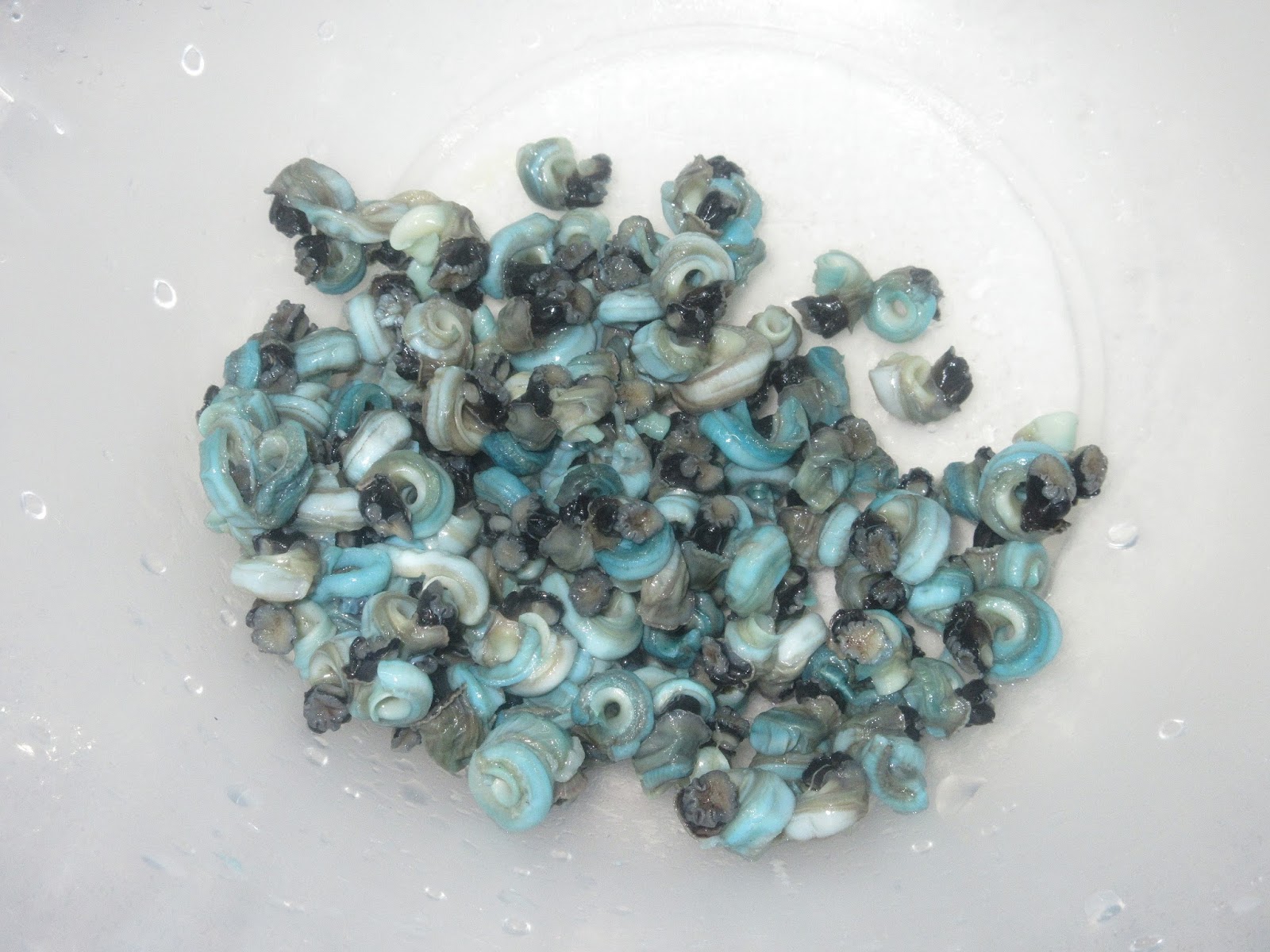
  13. Rehydrate the periwinkle in some water, remove the stubs on the head, and divide into two. 
    Soaked periwinkle

    Removed the stub heads from the periwinkle
  14. Place half into the oha soup and another into the nsala pot. 
    Adding the periwinkle
  15. Now, divide the chopped ozizia leaves into two and add them into both pots of soup and allow to boil for about 2 minutes. 
    Adding the oziza leaves
  16. Now add the chopped oha leaves into just the pot for oha soup and stir and take off the heat IMMEDIATELY. I also like to add a few oha leaves into the nsala too, just b'cos i like it.
  17. Take both pots off the heat source and its ready to serve with some semolina or eva or any swallow really.
Tips
  1. Remove the soup from the heat once you add the oha leaves, or else it would turn brown and look wilted not green-fresh.
  2. Some people like to add some ground egusi into their oha soup, which is also nice.

Nigerian Puff-Puff/ Ghanaian bofrot

Hi Guys!!

Hope you had a wonderful week?...I sure did.

Ever had one of those days when all you want to eat is something fried, hot, soft and yummy, something from home that would be perfect for the horrible spring weather (cold and wet) we are having here. Well, fried yam came to mind first, but I just wasn't in the mood to go looking for yam tubers here in Sheffield.

So, I decided to try out a recipe from way back. Funny thing is, I might probably be the first or only Nigerian child that never actually had puff puff made at home. I'm not sure why, but for some reason, I don't remember my mum making it for us. I remember having it as a child though because one of my uncles bought it from a hawker on the street. 


I didn't eat it again until I went to Ghana. Its actually called 'Kose' in there, its made into very huge balls and is usually served as breakfast with some 'koko' which is pretty much very light and watery 'pap/akamu' in Nigeria.  From the kose-seller down my street, you would probably get about two huge balls of 'kose' with about a cup of 'koko' and that was a very filling breakfast... trust me!

So, I decided to re-create those fond memories of 'kose/ puff puff' without the koko/ akamu in this recipe, and make mine a bit more playful, and small for portion control. 

So heres how I made it.

Ingredients
  • 1tbsp of yeast
  • 2 cups of flour
  • 1tsp of nutmeg
  • 1/2 cup of warm water
  • 1/2 cup of warm milk
  • 1tbsp of sugar
  • 1 tsp of salt
  • 1 egg (optional)
  • 1 tsp of pepper
  • 2 litres of oil for frying
Instructions
  1. In a bowl, place the flour, salt, nutmeg, egg (optional) and pepper then mix together. It might became sticky and almost doughy if you add the egg, if not it would just be the dry ingredients.
    Flour in the bowl

    Adding the nutmeg

    Adding salt into the flour and nutmeg
  2. Add the cup of warm water into the cup of milk, add the sugar and mix. Then add the yeast and allow it to activate for about 5 minutes.
    Yeast being added to the warm milk and water

    Activating the yeast
  3. Gradually add the yeast mixture into the dough or flour mixture and mix till it becomes slightly runny and sticky. 
    Adding the yeast into the flour


    Sticky batter
  4. Cover with a cling film or towel and place in a warm place for about 20 minutes.
    After 20 minutes, bubbles begin to form in the batter
  5. Place the frying oil in a deep pot and allow it to heat up.
    Heating up the oil
  6. Scoop the batter into the hot oil, and allow it to fry until it puffs up in the pan and the bottom begins to turn golden brown. Then flip it over and allow the other side to turn brown. (Mine had funny shapes...lol)
    Placing the batter into the hot oil

    Flipping one side over
  7. Remove from the oil, and serve immediately.


Monday, 4 April 2016

General Tso's Chicken

Hi Guys!!

Hope you had a wonderful week?...I sure did!

Yesterday, I went to visit my friend Anna in Bristol. We met at a medical symposium three weeks ago, and just hit it off. She told me that she spent her last summer in Ghana, so it was fun to reminisce about the GH-life, places and of course the food. After the symposium, she invited me over to her place and I promised her a visit. 

We had a fun day together and I guess the most memorable part of the visit for me was the food naturally (#wink). She didn't cook, but ordered some Chinese take -away for us. The food arrived, she dished it and served me.  I almost licked the plate. IT WAS FINGER LICKING GOOD!!... I had to ask what she ordered, and she said its called 'General Tso's Chicken'. 

When I got back, I knew I had to try and re-create it at home, so I started my research. Its a pretty simple recipe, but its got a lot of ingredients and components.  The ingredients are pretty much the same in a lot of the recipes, but I was able to tweak it to my taste.


There are three parts to this recipe. 

First, I had to make the base sauce or brown sauce. This sauce has a lot of ingredients but it is pretty versatile.  I've used it in my stir fry recipes; beef, chicken, vegetable and egg fried rice. It can also keep in the fridge for a while. I kept mine for about three (3) weeks and use it when ever I want. Next was to make the General Tso sauce, which was pretty easy, and finally the chicken has to be seasoned and prepped for frying.

So this is how I made mine.

Ingredients
For the base sauce
  • 1/3 cup of oyster sauce
  • 2 Tbsp of hoisen sauce
  • 1 cup of light soy sauce
  • 1/2 cup of cooking wine (I used a regular white wine)
  • 2 Tbsp of dark soy sauce
  • 1/3 cup of sugar
  • 1 Ginger root
  • 1 Spring onion (cut into three parts)
  • 2-3 Garlic cloves
  • 2 cups of heated chicken stock
To make the general tsp's sauce
  • 1 Tbsp of sweet chilli sauce (sugar is an alternative)
  • 1/2 cup of vinegar
  • 1 Tbsp of chilli sauce (siracha)
For the chicken
  • 1-2 chicken thighs (chopped into small pieces)
  • 1 tsp of salt
  • 1/2 tsp of garlic powder
  • 1/2 tsp of pepper
  • 1 egg
  • 1 tsp baking soda
  • 1/3 cup of corn starch
  • 2 Tbsp of vegetable oil
  • 3 cups of oil for frying
Extras
  • 1 Tbsp of chopped garlic
  • 1 Tbsp of chopped spring onions
  • A wok
  • Bowls
  • Slurry: 1tsp of corn starch + 1tbsp of water
Instructions
  1. In a bowl, combine all the ingredients for the base sauce and set it aside. The spring onions, garlic and ginger need to infuse for about 30-60 mins. Then they should be removed  with a sieve.
    A cup of the base sauce
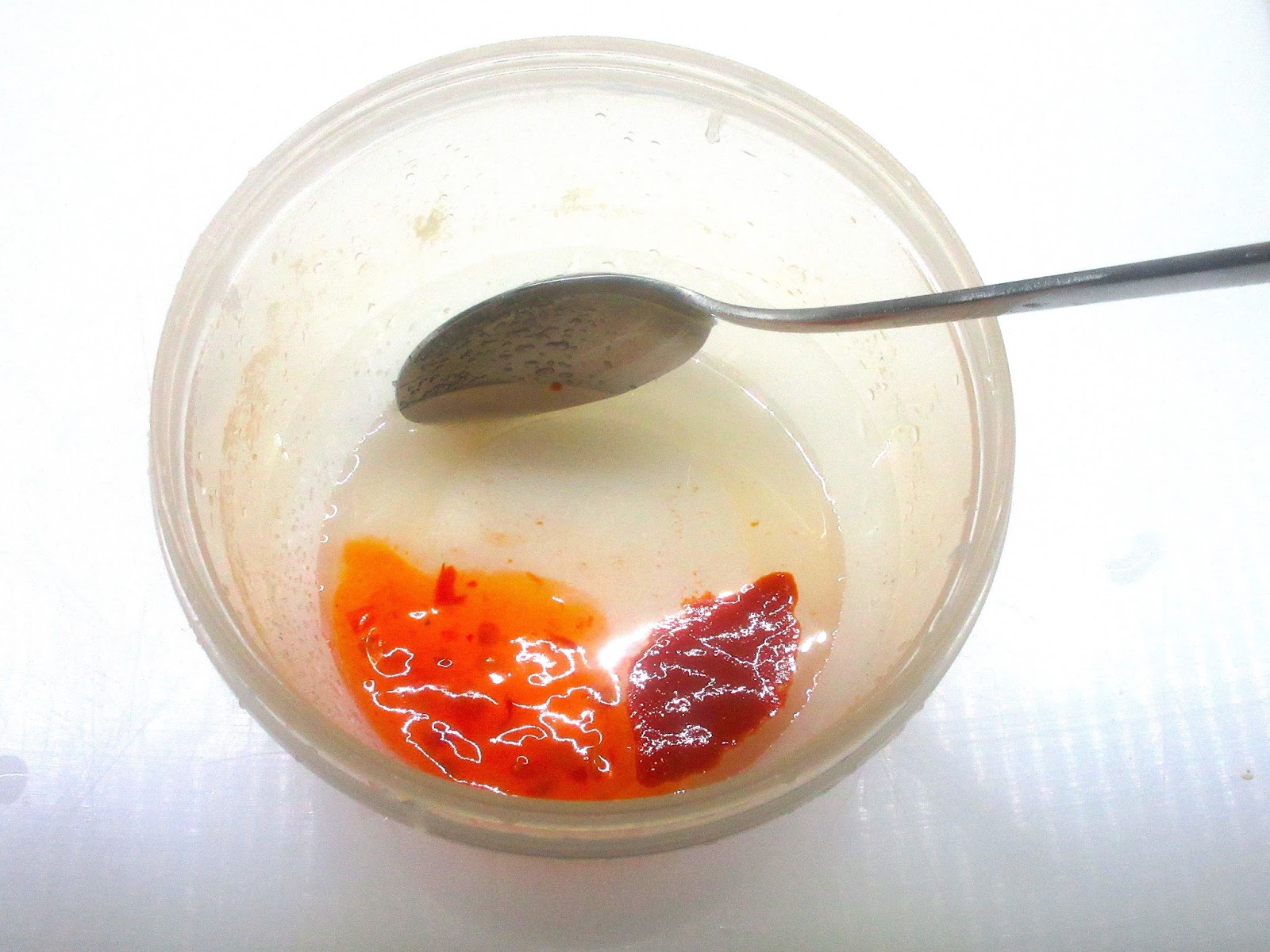
  2. Make the general two sauce by combining all the ingredients together, and set aside.
    The vinegar, chilli sauce and sweet chilli sauce

    The General Tso sauce
  3.  Take the quantity of base sauce you would need ( I used 1 cup) and combine it with the general tso sauce, mix and set aside.
    The base sauce

    Adding the general two sauce to the base sauce

    The combined sauces
  4. Chop the extra garlic and ginger and set aside.
    The green onion and garlic

    Chopped green onion and garlic
  5. Place the chopped chicken thighs in a bowl. 
    Chopped chicken thighs
  6. Add the salt, garlic powder, pepper, egg, baking soda  and mix very well.
  7. Adding salt to the chicken

    Pepper added

    Garlic powder added

    An egg added

    The baking soda added

  8. Cover the bowl with cling film, and place in the fridge for about 20-30 minutes.
  9. Remove the chicken from the fridge, add the corn starch and mix well. Then add the 2 tbsps of vegetable oil and mix well. This would help make the batter smooth.
    Adding the corn starch into the mixture

    Adding the oil to the corn starch mixed chicken

    The oil mixed into the batter
  10. Place the pot of oil on the stove and allow it to heat up.
  11. Add the chicken pieces one by one, using a toothpick into the hot oil (carefully) and allow it to fry for about 4 minutes. Then remove and drain on a kitchen towel.
    Placing the chicken pieces into the pot of oil

    Frying the chicken 

    Check out the beautifully smooth coating on the chicken

    Removing the pieces from the oil after 4 minutes
    Chicken placed on kitchen towels to allow the oil drain off
  12. Place the wok on fire, and add about 2 tbsps of oil into it. Now add the chopped garlic and spring onions and sauté for a bit (don't allow it to burn kinda like mine did).
    Spring onions and garlic in the wok
  13. Now add the general Tso's sauce into the wok, and allow it to heat up. Add the slurry, stir and allow the sauce to thicken bait before adding the chicken pieces.
    Adding the general Tso sauce into the wok

    Making the slurry

    The sauce is beginning to thicken
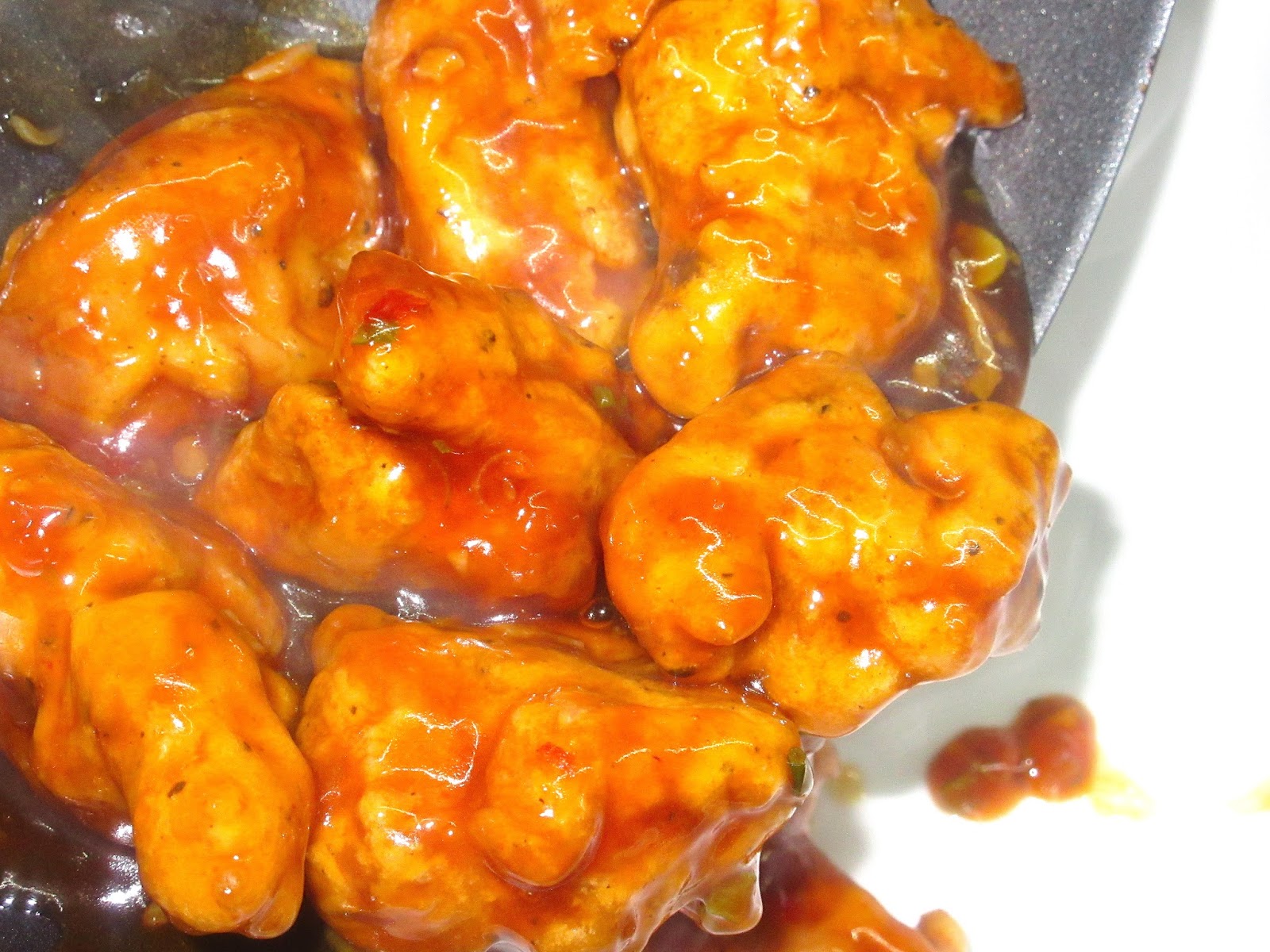
  14. Coat the chicken pieces with the sauce and remove from the heat. 
    Adding the chicken into the sauce 


    Chicken coated in the sauce
  15. Now serve. 
    Removing the chicken from the wok into a plate
Tips
  1. Most of these ingredients can be found in your local Asian market or supermarket, and are relatively in-expensive.
  2. Try to ensure the garlic doesn't burn in the wok.
  3. The quantity of ingredients you use in the chicken depends on the quantity of chicken you would be using, so make it according to your taste.
If you do try this recipe out, don't forget to hashtag #eleanorzkitchen so I could see how yours turns out.